
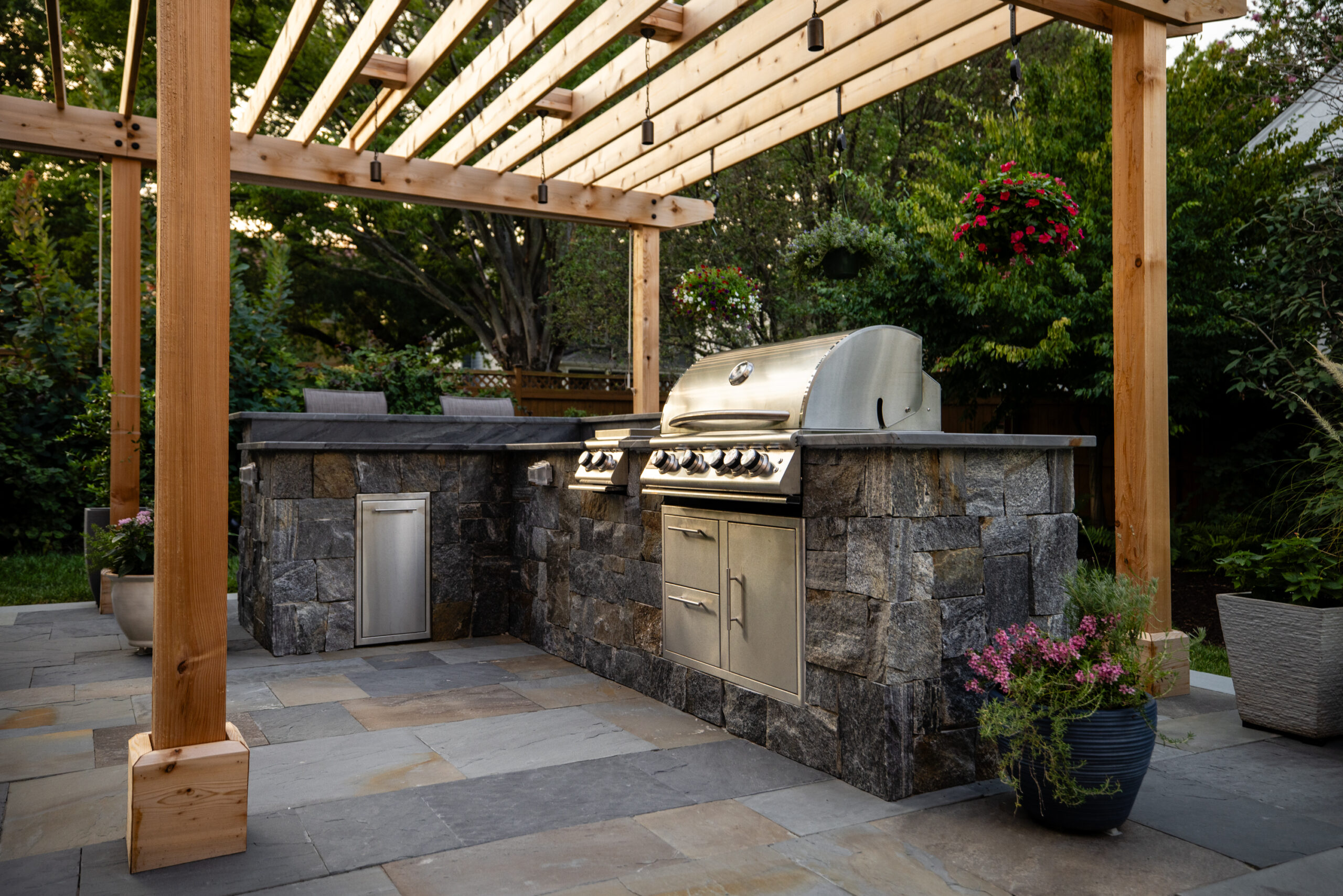
Memorial Day is just around the corner, and with it comes the season of backyard cookouts, long evenings on the patio, and the kind of effortless hosting that makes warm-weather weekends worth waiting for. If you’ve been thinking about adding or upgrading an outdoor kitchen, now is the perfect time to plan it right. A well-designed outdoor kitchen isn’t just a grill and a countertop. It’s a functional extension of your home that, when built thoughtfully, pays dividends every single summer.
The difference between an outdoor kitchen you love and one you tolerate usually comes down to decisions made early during design and installation. Here’s how to get them right.
Start With How You Actually Cook, Not How You Imagine You Will
Before selecting appliances or materials, be honest about your hosting style. Do you smoke brisket low and slow on weekends, or are you more of a quick-sear, weeknight griller? Do you host large groups or intimate dinners? Will kids and pets be part of the equation?
Your actual cooking habits should drive appliance selection, layout, and workflow, not the other way around. Getting this clarity up front prevents expensive regret later.
Design for Workflow, Not Just Aesthetics
The most beautiful outdoor kitchens are also functional ones. Borrow the classic indoor kitchen principle: think in zones.
- Prep zone: countertop space adjacent to the grill for staging ingredients, plating, and cutting. Generous prep space is the most underestimated element in outdoor kitchen design.
- Cook zone: your primary heat sources (grill, burners, smoker) positioned with adequate clearance and ventilation.
- Serve and gather zone: an island bar, counter seating, or pass-through that keeps guests connected to the cook without crowding the workspace.
- Storage and clean-up: under-counter storage, a sink if plumbing allows, and proper drainage to make post-cookout cleanup easy.
Leave room to move. A common mistake is packing too many appliances into the design at the expense of counter space and traffic flow. Plan for two people to work side by side comfortably.
Think About Utilities Early, They’re Expensive to Change Later
Gas lines, electrical runs, and water supply need to be addressed during construction, not as an afterthought. Adding them after the fact means breaking into completed work, which costs significantly more and disrupts the finished look.
Even if you don’t plan to add a refrigerator, sink, or built-in lighting right away, rough in the connections now. The marginal cost during installation is minimal. The cost of adding them in year three is not.
Choose Materials Built for Virginia’s Climate
Richmond-area homeowners deal with hot, humid summers, the occasional ice storm, and a fair amount of seasonal temperature swing. Not every material handles this gracefully.
For countertops, a light colored granite holds up well and resists heat, stains, and moisture better than wood or standard concrete. For cabinetry and framing, stainless steel, aluminum, or properly treated masonry are far more durable than wood or polymer, which can warp, fade, or harbor mold over time. For flooring and surrounding hardscape, slip-resistant pavers or textured concrete keep things safe when conditions are wet.
Don’t Underestimate Shade and Shelter
A pergola, shade sail, or covered roof structure over your outdoor kitchen dramatically extends its usability. Direct afternoon sun on a 95-degree July day in Central Virginia makes even the most beautifully designed kitchen uncomfortable to use, and can damage appliances and surfaces over time.
Plan for shade and partial enclosure as part of the original design, not as an add-on. If you intend to cook even occasionally in the evening, functional and ambient lighting should be incorporated from the beginning.
Appliance Selection: Quality Over Quantity
It’s tempting to spec out every appliance available, but outdoor appliances are exposed to the elements year-round, and more components mean more maintenance and more potential failure points.
Invest in one excellent primary grill rather than two mid-grade units. Prioritize stainless steel interiors, commercial-grade burners, and appliances rated for outdoor use. Your grill will be rained on, sun-bleached, and used hard for years. Buy accordingly.
Ready to Start Planning?
An outdoor kitchen is one of the highest-impact investments you can make in your outdoor living space, and the summer cookout season is the best time to enjoy it. The Glen Allen Grounds team works with homeowners throughout the Richmond area on outdoor kitchen design and installation, from initial concept through final hardscape. We’ll help you think through the details before the first block is laid.