
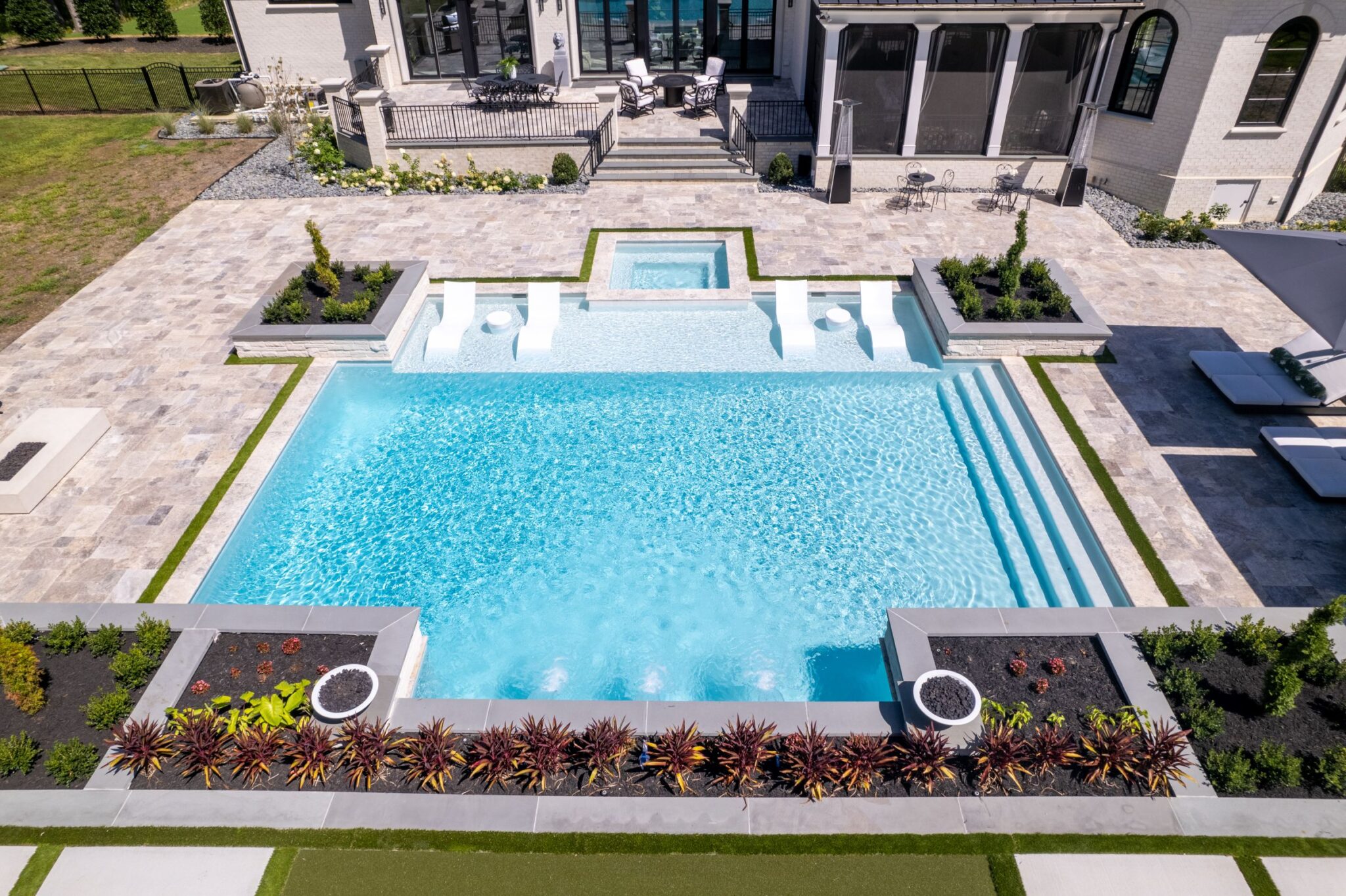
Designing the perfect hardscape around your pool in Richmond, Virginia, requires careful consideration of various factors to ensure both functionality and aesthetics. In this guide, we’ll explore the different types of materials you can use, provide tips for designing your pool hardscape, discuss how to determine the size of your space and essential features to include, and highlight current trends in the industry.
Whether you’re looking to create a luxurious retreat or a family-friendly space, this comprehensive overview will help you make informed decisions for your poolside oasis.
Types of Materials
- Pavers
- Overview: Pavers are versatile and come in a variety of shapes, colors, and sizes. They can be made from different materials such as brick, concrete, and natural stone.
- Heat Retention: Pavers generally stay cooler than concrete and natural stone but warmer than porcelain and travertine.
- Pros: Durable, easy to replace individual pieces, aesthetically pleasing.
- Cons: Can shift over time if not installed properly, requiring occasional maintenance.
- Natural Stone
- Overview: Natural stone includes materials like bluestone, limestone, and travertine. Each type brings a unique look and feel to your pool area.
- Heat Retention: Bluestone tends to be the hottest, while travertine is one of the coolest options available.
- Pros: High-end look, durable, unique variations.
- Cons: Can be expensive, some stones can be slippery when wet.
- Concrete
- Overview: Concrete is a popular choice for pool decks due to its affordability and ease of installation. It can be poured in a variety of finishes and colors.
- Heat Retention: Concrete is one of the hottest materials, which can make walking barefoot uncomfortable in peak summer heat.
- Pros: Cost-effective, versatile in design, easy to install.
- Cons: Can crack over time, retains heat, less visually appealing than natural stone.
- Porcelain
- Overview: Porcelain tiles are a luxurious option, offering a sleek and modern look. They are highly durable and come in a wide range of styles.
- Heat Retention: Porcelain tiles are among the coolest materials, making them comfortable to walk on even on the hottest days.
- Pros: Stays cool, low maintenance, resistant to stains and scratches.
- Cons: Can be slippery when wet, higher initial cost.
Tips for Designing Your Pool Hardscape
Consider the Climate
Richmond’s hot and humid summers mean you’ll want to choose materials that stay cool underfoot. Travertine and porcelain are excellent choices for their heat resistance.
Safety First
Safety should always be a top priority. Opt for materials with a non-slip surface, especially if you have children or plan to entertain frequently. Textured pavers or naturally textured stones are good options.
Aesthetic Appeal
The material you choose should complement the overall design of your outdoor space. Natural stones like travertine and limestone offer a timeless, elegant look, while concrete can be customized to fit any design scheme.
Maintenance and Durability
Consider how much maintenance you’re willing to perform. Natural stone and porcelain tiles are generally low maintenance, while concrete may require sealing and repairs over time. Pavers are easy to replace if one gets damaged.
Determining the Size and Features of Your Pool Hardscape
Size of the Space
When planning the size of your pool hardscape, consider the following:
Usage: Think about how you plan to use the space. Do you frequently host large gatherings or prefer intimate family time? The size of your hardscape should accommodate the number of people you expect to entertain.
Furniture and Amenities: Ensure there is enough space for lounge chairs, tables, and any other outdoor furniture you plan to include. You’ll also want to leave room for walking paths and open areas for activities.
Flow and Accessibility: The layout should allow for easy movement around the pool and to other parts of your yard. Consider pathways that connect to the house and other outdoor features.
Essential Features to Include
- Shade Structures
- Pavilion or Pergola: These structures provide much-needed shade during hot summer days. A pavilion offers more complete coverage, while a pergola allows for some sunlight to filter through.
- Umbrellas: For a more flexible option, large outdoor umbrellas can be placed strategically around seating areas.
- Fire Features
- Fire Pit or Fireplace: Adding a fire feature can extend the usability of your pool area into the cooler months. It also creates a cozy ambiance for evening gatherings. We recommend gas fire pits, with a minimum burner output of 180,000 BTUs, which allows you to use it all year long.
- Outdoor Lighting
- Pathway Lights: Illuminate pathways to ensure safe navigation at night.
- Accent Lighting: Highlight key features of your landscape, such as seating walls, fire features, water features, or architectural elements.
- Up Lights: Light up ornamental trees in the surrounding landscape or decorative pergolas.
Current Trends in Pool Hardscaping
Water Features
Water features have become increasingly popular in pool hardscape designs. They add a soothing background noise that can enhance the overall ambiance of your outdoor space. Options range from simple waterfalls to elaborate fountains and streams, providing both aesthetic appeal and a relaxing environment.
Artificial Turf
Artificial turf is another trend that has gained traction. Whether used for putting greens or as simple 8-inch accents around the pool area, artificial turf offers a low-maintenance, evergreen option that adds a touch of greenery without the upkeep of natural grass. It can create a visually appealing contrast with the hardscape materials and provide a soft surface for walking or lounging. Careful though, this material can also be extremely hot and is not recommended for larger surface areas around a pool where people will gather.
Tanning Shelves
Tanning shelves, also known as Baja shelves or sun shelves, are shallow platforms within the pool that have become a popular trend. These shelves are typically about 10 inches deep and provide a great place to relax and soak up the sun while staying cool in the water. They are also a safer option for children to play in, as the shallow depth minimizes the risk of drowning while still offering a fun water experience.
Let’s talk about your ideas!
Choosing the right hardscape material and design for your pool area in Richmond, Virginia, involves balancing aesthetics, safety, maintenance, and comfort. By understanding the properties of pavers, natural stone, concrete, and porcelain, you can create a beautiful and functional poolside retreat that will stay cool and inviting all summer long. Remember to consider the climate, prioritize safety, focus on the aesthetic appeal, and factor in maintenance requirements. Additionally, plan the size of your space carefully and include essential features like shade structures, fire features, and outdoor lighting to enhance the usability and enjoyment of your pool area. Embracing current trends such as water features and artificial turf can further elevate the design, making your poolside a modern and tranquil escape.
For more information about your future pool project, contact the expert team at Glen Allen Grounds at 804-719-9156 or info@glenallengrounds.com.